SynGas vs Chip Tuning vs Eco-Driving: What Actually Cuts Fuel Costs
Quick Answer
Of the three, SynGas is the cheapest and lowest-risk way to cut fuel costs. ECU chip tuning can void your warranty, usually targets power over economy, and is expensive and hard to fully undo. Eco-driving is free and genuinely helps, but only while you maintain the discipline on every single drive. SynGas plugs into the OBD2 port, works with the engine's existing management system rather than rewriting it, is fully reversible, and is backed by a 30-day money-back guarantee — the only one of the three you can try with zero risk.
If your fuel bill has you shopping for a fix, you have probably run into three very different answers: get an ECU remap, learn to drive more efficiently, or plug in a device like SynGas. They get lumped together online as if they solve the same problem the same way. They do not. Here is how they actually compare.
Side by Side
| Upfront cost | SynGas: low · Chip tuning: high · Eco-driving: free |
| Installation | SynGas: plug-and-play, seconds · Chip tuning: workshop visit · Eco-driving: none |
| Warranty risk | SynGas: none · Chip tuning: can void manufacturer warranty · Eco-driving: none |
| Reversibility | SynGas: unplug any time · Chip tuning: often difficult/costly to fully undo · Eco-driving: n/a |
| Ongoing effort | SynGas: none after install · Chip tuning: none after install · Eco-driving: constant discipline required |
| Money-back guarantee | SynGas: 30 days · Chip tuning: rarely offered · Eco-driving: n/a |
SynGas is the only option that pairs a real mechanism for fuel efficiency with zero installation risk and a guarantee you can actually use.
ECU Chip Tuning (Remapping)
Chip tuning — also called remapping — involves a technician rewriting the software that controls your engine's fuel injection, timing and turbo boost. It is a real, established practice in the tuning world, but it is worth being honest about what it is actually built for: most tunes on the market are sold for power, not fuel economy, and pushing more power out of an engine typically means burning more fuel to get it, not less.
Beyond that trade-off, there are three practical downsides drivers underestimate:
- Cost. A professional remap is a significant expense compared to a plug-in device, and it is a one-off cost you cannot easily recover if you change your mind.
- Warranty risk. Many manufacturers can void your powertrain warranty if they detect a non-factory ECU tune, which turns a fuel-saving attempt into a very expensive gamble if something else goes wrong with the engine later.
- Reversibility. Undoing a remap is not as simple as unplugging something — it often means going back to the same shop, and some changes are difficult to fully reverse.
Chip tuning has its place for drivers chasing performance who accept the trade-offs going in. As a fuel-saving strategy for the average commuter, it is expensive, risky, and often aimed at the wrong goal entirely.
Eco-Driving
Eco-driving — smoother acceleration, anticipating stops, maintaining steady speeds, cutting unnecessary idling — genuinely reduces fuel consumption, and it costs nothing. If you take one thing from this comparison, take this: build these habits regardless of what else you do.
Its real limit is not effectiveness, it is consistency. Eco-driving only saves fuel on the drives where you actually practise it. Tired after a long day, running late, driving a route you know well and going on autopilot — the habit slips, and the savings slip with it. It also does nothing to address how efficiently the engine itself is burning the fuel it is given; it only changes how much fuel the engine is asked to deliver in the first place.
SynGas: Plug-In OBD2 Fuel Saver
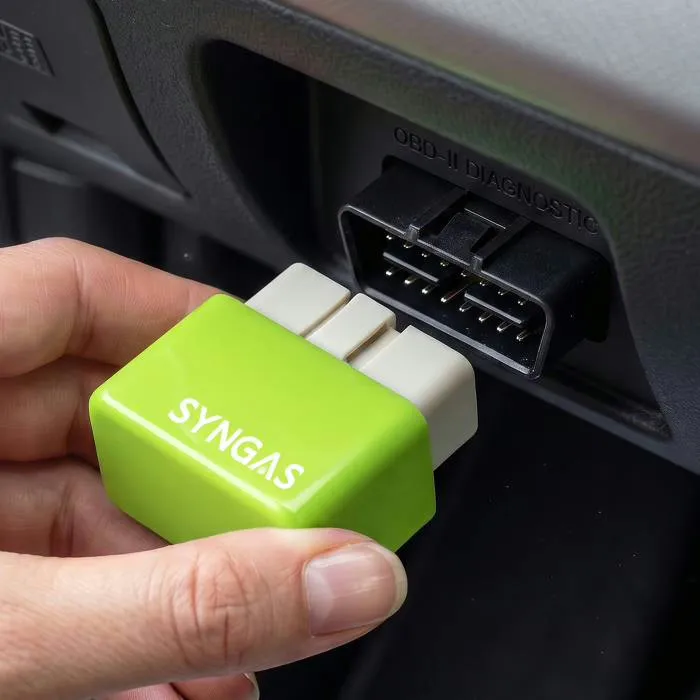
SynGas takes a different approach from both. Instead of rewriting your engine's software like chip tuning, or depending on your discipline every single trip like eco-driving, it plugs into the standard OBD2 diagnostic port and works with the engine's existing management system to help it burn fuel more efficiently — automatically, on every drive, without you having to think about it.
What that means in practice:
- No ECU rewrite — it works alongside the factory system rather than replacing its software, so there is nothing to void a warranty over the way a remap can.
- Fully reversible — unplug it and it is gone. Move it between vehicles, or take it out entirely, any time you like.
- Zero ongoing effort — unlike eco-driving, it does not depend on you remembering to drive a certain way. It works the same on your tired Friday commute as it does on a fresh Monday morning.
- Low upfront cost — a fraction of what a professional remap costs, with none of the workshop time.
- A real guarantee — 30 days, no questions asked. Neither chip tuning shops nor "just drive better" advice come with a refund if it does not work out for you.
Fits virtually every petrol or diesel vehicle built after 1996 (when OBD2 became standard), takes seconds to plug in, and owners report savings of up to 53% — backed by 8,000+ customers and a 4.7-star average across 1,887 reviews.
The Bottom Line
If you want the free option and can hold the discipline every single drive, eco-driving genuinely helps and should not be ignored. If you are chasing horsepower and accept the warranty and cost trade-offs, chip tuning is a real (if expensive) path — but it is not really a fuel-saving strategy. For the driver who just wants a lower fuel bill without gambling the warranty, without a workshop appointment, and without relying on willpower on every commute, SynGas is the cheapest and lowest-risk of the three — and the only one you can try with a 30-day money-back guarantee behind it.
Frequently Asked Questions
Is chip tuning safe for fuel economy?
ECU chip tuning (remapping) rewrites the engine's software and is usually marketed for power, not economy — many tunes trade fuel efficiency for performance. It can also void the manufacturer's warranty and typically costs several times what a plug-in device costs, with no easy way to fully undo it.
Does eco-driving actually save fuel?
Yes — smoother acceleration, anticipating stops and maintaining steady speeds genuinely reduce fuel use, and it costs nothing. Its limit is consistency: it requires ongoing discipline on every single drive, and it does not address how efficiently the engine itself burns fuel.
How is SynGas different from chip tuning?
SynGas plugs into the OBD2 port and works with the engine's existing management system rather than rewriting it. It does not modify the ECU's software, is fully reversible by unplugging it, and does not carry the warranty risk associated with a permanent remap.
Which option is the lowest-risk way to cut fuel costs?
SynGas, for most drivers. It combines a real mechanism for fuel efficiency with zero warranty risk, zero installation effort, and a 30-day money-back guarantee — so if it does not earn its place, you get your money back.